

From Process to People: How Brigitte van Buggenum Is Steering UWV's Human-Centered CX Shift
From Process to People: How Brigitte van Buggenum Is Steering UWV's Human-Centered CX Shift
In the complex world of social security, the Dutch Employee Insurance Agency (UWV) is on a journey to become more human, more personal, and more responsive to the people it serves. One of the key figures leading this transformation is Brigitte van Buggenum, Head of Client Expertise and Delegate Commissioner for Client Participation at UWV. Her mission? "To make sure the voice of our clients and employers is heard."
Who is Brigitte van Buggenum?
Brigitte's commitment to customer experience runs deep. "That mindset is in my DNA," she reflects. With years of volunteering, participation in local advisory boards, and now a leading role at UWV, her career is rooted in empathy, inclusion, and doing what’s right for the people around her.
Understanding the brand: UWV
UWV (Uitvoeringsinstituut Werknemersverzekeringen) is responsible for implementing employee insurance and benefits in the Netherlands. Its customer base includes not just unemployed or ill citizens, but also employers, pension funds, and other stakeholders. This diversity, says Brigitte, "makes the work complex and the service needs highly varied."

The challenge: From one-size-fits-all to personalized service
Between 2010 and 2020, UWV operated under immense budget pressure, leading to a strong focus on efficiency. "It became a one-size-fits-all system," Brigitte explains. "Everything had to be digital, and personal contact was minimized. But many clients struggled with that." The result? Vulnerable groups falling through the cracks, leading to downstream effects like rising numbers in debt assistance programs.
The solution: Building a human-centered service model
Change began taking shape around 2019 and gained momentum post-COVID. Under the leadership of board member Nathalie van Berkel and with Brigitte’s guidance, UWV started reimagining its services. Three key building blocks were developed:
• A unified service concept to replace siloed visions across divisions
• A central client signal management system to aggregate and analyze feedback
• A human-centered measurement framework to assess whether service feels humane
"Each of our divisions had its own idea of service, but clients move across those silos. We needed one shared direction."
Zooming in: What is the human-centered measurement framework?
This framework is designed to evaluate whether people experience UWV’s services as humane, helpful, and respectful, not just efficient. It goes beyond traditional KPIs like turnaround times or error rates. Instead, it focuses on how service feels to those on the receiving end.
By combining data from complaints, feedback, interviews, and service usage patterns, the framework highlights moments where citizens feel let down. It also compares experiences across districts to surface inconsistencies. Brigitte’s team then works with divisional leaders to address the gaps.
Getting from theory to implementation hasn’t been simple. “We developed the framework, but that doesn’t mean everyone uses it the same way yet,” she admits. Some districts still respond to client queries within two days; others within 24 hours. Her team uses data to highlight these gaps and nudge the organization toward consistency.
Lessons learned & advice for CX professionals
Brigitte shares several hard-won insights that CX professionals in other complex organizations can learn from:
- Don’t mistake the method for the outcome. “The danger in CX is treating the method as the goal. Even a perfectly executed journey map means little if your client isn’t actually better off.”
- Zoom out to the full ecosystem. Problems often arise at the intersection of rules and responsibilities. “We have to work across agencies. A person isn’t just a client of UWV, they’re also interacting with municipalities, tax authorities, and more.”
- Sometimes, you need to color outside the lines. “Just do it, test it, and if it doesn’t work, you can always ask for forgiveness later.”
Final thoughts
What makes Brigitte proud? "That the will to really see the client has grown across UWV. Despite everything, there is real motivation to change from inside out." Her advice to leaders: don’t let a thousand good initiatives dilute your focus. "We let too many flowers bloom. Now we need alignment."
Her story is a powerful reminder that even in highly regulated environments, CX transformation is possible if you're willing to bring the human voice to the heart of every decision.
When colleagues across the organisation realise they can make a difference, customer experience becomes not just a function but a shared way of working.

From Fragmented Efforts to Unified Experience: How Katja Veen-Buchholz Elevated CX at HTM
From fragmented efforts to
Every day, more than 300,000 people travel through the Hague region using HTM’s trams and buses. Public transport may appear predictable from the outside, yet the experience of travelling is shaped by hundreds of small interactions: announcements, clarity, cleanliness, helpfulness and coordination.
HTM already scored highly in traveller satisfaction and was repeatedly named the best city transport operator in the Netherlands. The next question became: how do you shift from “good” service, to an organisation where every department feels responsible for the traveller experience?
For Manager Customer Experience Katja Veen-Buchholz, the mission was clear. She set out to build a shared sense of customer ownership in a complex operational environment.
Who is Katja Veen-Buchholz?
Katja joined HTM after building experience at KPN (telecom), Eneco (energy) and Nationale-Nederlanden (insurance and pensions). These roles shaped her strong foundation in communication, customer focus and organisational change. She brought this experience into HTM, where the CX function still needed to be built almost from scratch. Her approach is pragmatic and people-centred, with a natural ability to unite disciplines and turn ideas into movement.

The challenge: embedding customer focus in a complex organisation
HTM already offered reliable service, yet customer centricity was not woven into everyday behaviour. Improvements happened in pockets, departments worked largely in silos and there was no shared structure or ownership for CX.
Katja’s challenge was to turn customer focus from a good intention into a daily reality, supported from the executive team through to the operational level.
The approach: ownership, rhythm and collaborative improvement
Van Lanschot Kempen began its CX journey in 2015, but early efforts were fragmented, focusing mostly on product and process improvements. According to Mustafa, this wasn’t enough: “With picking up a customer journey, you don’t necessarily change the DNA of an organization. That goes with baby steps.” By 2019, the bank launched a formal CX program, structured around three components: strategy, measurement & improvement, and people & culture.
The solution: A two-fold transformation
Understanding the organisation from the inside out
Katja began by organising duo-interviews across levels and disciplines. Colleagues from different disciplines such as HR, Operations and Legal were brought together to reflect on customer experience strengths, blind spots and opportunities. These insights formed the basis for six CX pillars and a simple maturity baseline.
Giving every pillar clear ownership
Each CX pillar was assigned to a duo consisting of one tactical manager and one operational manager. Together, they were responsible for defining priorities and delivering concrete results. Regular cross-pillar sessions aligned decisions and strengthened collaboration.
Creating rhythm and speed
Katja introduced an agile light rhythm with stand-ups, short cycles and demos. This made progress visible, created learning moments and helped maintain momentum.
Activating the TOV team for quick wins
To show impact quickly, Katja activated the multidisciplinary TOV team. TOV began as “Terug naar het OV” (Return to Public Transport), a post-pandemic initiative, and later evolved into “Top in het OV” (Excellence in Public Transport). The team focuses on small, high-impact improvements in short cycles. One example is refining information at tram and bus stops to make routes and disruptions easier to understand. These practical adjustments helped colleagues see how small changes can immediately improve the traveller experience.
Growing customer focus within her own team
Her team, originally focused on marketing, communication and content, gradually developed a stronger customer mindset. They went into the field, spoke with travellers and brought real customer insights into meetings and decisions. One of the projects they delivered was mapping the journey of travellers who received a fine for not purchasing a ticket. This revealed unclear communication, gaps in guidance and a payment process that was difficult to navigate. The improvements that followed made the experience less stressful for customers and increased payment completion rates, which directly generated additional revenue for HTM.
Building a culture where everyone contributes
What makes Katja most proud is seeing colleagues from across HTM initiate improvement ideas themselves. People discovered that their input matters and that small adjustments create real value for travellers. This culture shift contributed to higher customer satisfaction, cost improvements and HTM being recognised as the best city transport operator for the fifth consecutive year.
Lessons learned & advice for CX professionals
Engage your executive team early and keep them close.
Leaders need a clear storyline and visible progress to stay committed and help drive the movement.
Choose the right name and identity for your programme.
Katja learned that naming matters. The first name she picked did not resonate widely. A strong, clear identity creates shared language and helps colleagues feel part of the initiative.
Work multidisciplinary and build shared ownership.
Combining perspectives leads to better solutions. Predictable working rhythms help colleagues contribute ideas and anchor CX in everyday work.
Share the results you deliver.
Show both the customer and business impact. Improved satisfaction, fewer avoidable contacts, clearer payment journeys that increase completion, and the value created by new propositions all help colleagues see why CX matters and why their contribution makes a difference.
Final thoughts
HTM is an operationally complex organisation where thousands of small actions shape each day’s service. Katja’s work shows that transforming customer experience is not about grand gestures. It is about building ownership, creating rhythm and helping teams take small steps that lead to meaningful improvements for travellers.
When colleagues across the organisation realise they can make a difference, customer experience becomes not just a function but a shared way of working.

From student vibes to scalable service: Suzanne Mittendorff’s CX journey at Swapfiets
From student vibes to scalable service: Suzanne Mittendorff’s CX journey at Swapfiets
In the world of bike subscriptions, customer experience is not just about having a bike – it’s about freedom, convenience, and the confidence that problems will be solved quickly. That promise has been at the heart of Swapfiets from day one. But as the company expanded into eight countries and dozens of stores, the question became: how do you deliver a consistent, professional experience everywhere?
For Suzanne Mittendorff, Head of Customer Experience, that became her mission: building scalable standardization without losing the energy and friendliness of the brand.
Who is Suzanne Mittendorff?
Suzanne is 37 years old, studied economics, and started her career in banking. At De Bijenkorf she first experienced CX in a retail environment. Four years ago, she joined Swapfiets, where she became responsible for both store experience and the complete customer service operation across eight countries.
“Swapfiets is, at its core, a service company. We don’t sell bikes – we promise an always-working bike, without hassle.”
She leads the Swapdesk (customer service) and drives central initiatives to improve store experience. Purchases happen online, service via app, phone or WhatsApp – so CX is integrated into every process.

Understanding the brand: Swapfiets
Swapfiets was founded ten years ago by three students in Delft who wondered why owning a bike involved so much hassle. Their idea was simple:
✔ a fixed monthly price
✔ an always working bike
✔ Swap handles the repairs
They started with 100 second-hand bikes – which were rented out instantly. Today, Swapfiets has 280,000 customers across eight countries and 45 cities, including the Netherlands, Belgium, Denmark, Germany, Austria, France and the UK.
The target group expanded from students to young professionals and e-bike users. Employers now also offer Swapfiets as a mobility benefit.
The challenge: rapid growth without consistency
In the early years, priority was expansion: more cities, more bikes, more stores. But that created a risk:
- each store did things differently
- customer experience depending on who worked that day
- messy counters, dead plants, duct-taped posters
- screens installed but turned off
- conflicting experiences between store and customer service
“Everyone delivered awesome service, but without global standards. That stops working when you grow and offer e-bikes for your professionals.”
The solution: SwapCares principles and self-service that works
Suzanne and her team created service standards and the SwapCares principles to guide employee behavior: Connect, Aware, Respect, Extra Mile and Smile
To make this real, she launched service masterclasses, mystery visits, Store of the Year Awards, service ambassadors and scorecards.
“You can’t explain it once. You need repetition. People need to see it, practice it, and celebrate it.”
By analyzing data, Suzanne discovered that many customer questions were preventable. Swapfiets built solutions such as a scheduling tool to plan appointments, clear invoice explanations, and product videos.
The result: 30% fewer customer contacts – without reducing human service.
Lessons learned & advice for CX professionals
- Start with consistency:
Set the foundation before scaling. Clear service standards and behaviour guidelines ensure customers receive the same experience no matter where or when they engage with you. Structure protects your brand from growing “messy.” - Involve frontline teams early:
Your teams know which processes confuse customers and where friction actually happens. When they help shape the solution, adoption is faster and the fixes are more realistic. - Follow-up matters more than launch:
A CX change doesn’t succeed in a workshop — it succeeds on the floor. Continuous coaching, visual examples, and celebrating small wins keep momentum alive long after the kick-off. - Self-service + human service must coexist:
Customers want convenience and autonomy, but they also want reassurance that a person is there when needed. Offering both reduces contact volume and increases trust.
Final thoughts
Swapfiets began as a student project with 100 bikes. Today it is an international service organization where CX is the core of the customer promise. “The best moment is seeing a blue bike wheel in the city and thinking: this works. That’s what we do it for.”
From Processes to People: Mustafa Gürel’s CX Journey at Van Lanschot Kempen
From Processes to People: Mustafa Gürel’s CX Journey at Van Lanschot Kempen
In the world of private banking, customer trust and relationships are everything. For Mustafa Gürel, Customer Experience Manager at Van Lanschot Kempen, driving customer experience has been a long-term journey of shifting the organization’s mindset from focusing on products and processes to building an experience rooted in emotions, strategy, and culture.
Who is Mustafa Gürel?
Mustafa Gürel has spent over 27 years in banking and insurance, with more than a decade sitting directly at the client table. Since 2010 he has been part of Van Lanschot Kempen, where he transitioned from private banking leadership into customer experience. For the past six years, he has been fully dedicated to embedding CX into the DNA of the organization. As he explains: “In 2018 I came into contact with the term customer experience, and that’s when my journey as a CX specialist truly started.”

Understanding the brand: Van Lanschot Kempen
Van Lanschot Kempen is the Netherlands’ oldest independent wealth manager, founded in 1737. The firm serves wealthy individuals, institutional clients, and investment banking clients, with private banking as its core business. In such a niche market, differentiation is key. “The biggest challenge is how to remain distinctive compared to competitors in a relatively small pond,” Mustafa says. CX has become one of the levers to achieve this.
The challenge: building CX from scratch
Van Lanschot Kempen began its CX journey in 2015, but early efforts were fragmented, focusing mostly on product and process improvements. According to Mustafa, this wasn’t enough: “With picking up a customer journey, you don’t necessarily change the DNA of an organization. That goes with baby steps.” By 2019, the bank launched a formal CX program, structured around three components: strategy, measurement & improvement, and people & culture.
The solution: A two-fold transformation
Crafting a clear customer promise
The first step was to develop a customer strategy with clear principles and emotions. Using workshops with colleagues across all levels, customer feedback, and data, the team defined three core principles—personal, clear, and alert. These principles became the guiding compass for all client interactions. “If you don’t have a customer promise, you don’t have a guide to steer customer experience in your organization,” Mustafa explains.
Embedding CX in culture
To activate the principles, Van Lanschot Kempen invested in training and inspiration. Every employee followed a four-hour mandatory CX module, followed by refreshers, e-learning, and regular inspiration sessions. This was crucial in helping colleagues translate abstract principles into daily behaviors. Mustafa emphasizes: “You can explain and train a lot, but you also need to show it in practice.”
Linking CX to business impact
To gain buy-in across the organization, the CX team linked customer metrics like NPS to business results. By proving that promoters deliver more financial value than detractors, they secured management support. “If you can show that customer experience also impacts the bottom line, it’s much easier to convince people,” says Mustafa.
Lessons learned & advice for CX professionals
From his journey, Mustafa highlights three lessons valuable for CX professionals:
- Start with a strong customer strategy. Without a clear customer promise, CX initiatives lack direction.
- Focus on culture change. Embedding CX requires training, inspiration, and constant storytelling across all layers of the organization.
- Show the financial impact. Linking CX metrics to business outcomes strengthens credibility and ensures executive commitment.
Final thoughts
Today, Van Lanschot Kempen has reached “Leading CX” status on the CCXP maturity scale, a goal the team set back in 2019. The challenge now is to sustain this level and continue growing. As Mustafa reflects: “Six years ago, customer experience wasn’t even on the agenda. Now, managing directors invite us to help shape their yearly plans. That shows how much the culture has changed.” His journey illustrates how perseverance, a clear strategy, and embedding CX in culture can transform even a centuries-old financial institution.
Taking CX to New Heights: Jini Sankatsing's Customer-Centric Flightpath at KLM
Taking CX to New Heights:
Jini Sankatsing's Customer-Centric Flightpath at KLM
In a complex, global operation like KLM, embedding customer experience (CX) into the fabric of the organization is no small feat. Yet for Jini Sankatsing, Director of Customer Experience, it has been both her mission and her passion. With nearly two decades at the airline, Jini’s CX journey illustrates how structure, strategy, and people come together to shape consistent and memorable experiences.
Who is Jini?
Jini Sankatsing has been with KLM for 17 years, currently leading the Center of Excellence within the CX organization. Her team supports the broader CX function with setting the CX strategy, data-driven insights, service design capabilities, and a focus on desired customer centric employee behavior. Her roots in branding and marketing, combined with early experiences at Pearl Opticiens, sparked her passion for customer-centricity: "That was where I was first fully immersed in understanding customer needs, insights, and positioning."

Understanding the brand: KLM
KLM Royal Dutch Airlines is a major European airline known for its operational excellence, Dutch approachability, and global network. As part of the Air France KLM Group, KLM has built a strong CX foundation with a unique Dutch identity, balancing innovation with practicality and a warm, reliable service culture.
The challenge: From siloed optimization to integrated experience
Around 2015, KLM recognized that while many teams were doing great work individually, their siloed setup hindered the delivery of a seamless customer experience. Jini recalls, "No one was really looking at how it all came together for the customer. We were optimizing within the silos but neutralizing value overall."
It was during this period that KLM formally established its CX organization. A clear purpose was defined “Creating memorable experiences”, along with a desired customer experience that would guide the company forward. To support this transformation, governance platforms were created where all customer-related topics could be discussed and steered collectively across business units.
Additionally, post-COVID, she found that the organization had drifted back into fragmented ways of working. "Everyone was working hard, but we had lost sight of where we were heading. And everyone was doing CX in their own way." As Jini put it, "The moment we're inconsistent internally in how we approach CX, we can never deliver a consistent experience to our customers."
The solution: A two-fold transformation
When Jini rejoined the CX organization in 2021 after a period in operations, she defined two main goals: set a clear, long-term CX strategy and further professionalize the CX department.
- Anchoring strategy in purpose and data
She and her team revisited KLM’s customer promise, expanding the brand purpose to: Creating memorable experiences on the planet we care for. From that ambition, three differentiators were defined:
- Convenient connections: KLM takes me to my destination using their wide network and convenient hub
- Meaningful interactions: KLM genuinely cares about me, showing personal interest and helping me when needed
- Peace of mind: Customers have total control throughout their journey, they rely on KLM and know what to expect
Through portfolio management and data analysis, the Center of Excellence now prioritizes initiatives based on potential customer impact. Each year, high-level key results are defined, representing the strategic areas where KLM wants to make the biggest difference for its customers. Underneath these results, clear KPIs are formulated to monitor progress and impact.
Jini explains, “We break the elephant into pieces each year. We define high-level key results and work with the teams to translate them into actionable projects.” These projects are aligned per domain and are supported by detailed analysis to ensure they directly contribute to the overarching customer goals. Quarterly, the teams review progress using performance data to track which initiatives are on track, identify impediments, and decide where adjustments are needed to stay aligned with the strategy.
What Jini especially appreciates about her role is the full-circle involvement: “Even though we’re a supporting department, we are also steering the organisation. I love that we are there right from the beginning—defining which topics deserve attention—and also at the end, checking if we’ve actually achieved what we set out to do.”
- Building a shared CX way of working
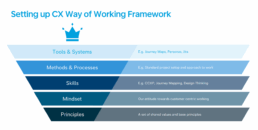
The second pillar tackled inconsistency. Despite years of CX maturity, each team approached their work differently. Jini’s team co-created a framework with five core components:
- Processes & Methods: A shared development framework from startup to monitoring. This includes clearly defined phases such as startup, research, solutioning, testing, implementation, and monitoring. For each phase, the concrete steps, expected outcomes, and transition criteria to move to the next phase are documented.
- Tools & Systems: Clear overview of resources available and needed.
- Skills & Capabilities: Defined CX competencies and training needs.
- Mindset: A culture of ownership, challenge, and customer advocacy.
- Principles & Values: A shared belief system across CX teams.
Support by the Center of Excellence varies depending on complexity—from light guidance, to medium involvement, to heavy support for in-depth data consultancy or strategic initiatives.
To embed this way of working, an ambassador network was launched, assigning a CX Way of Working sponsor in every department. Next to that, continuous training is offered not only to Customer Journey Managers, but also to the management team. A highlight of this initiative was a two-day safari, where the full management team tackled a real-life CX case on hand luggage, applying the full CX methodology from research to solution.
To ensure the approach remains relevant and applied, best practices are regularly shared. After the initial kick-off, quarterly reviews are held where teams reflect on their use of the framework, exchange learnings, and identify phases where extra attention or support is needed.
Jini says, “We involved everyone within the CX organisation, from our EVP to customer journey managers. That was key to making it stick.” Their motto? “Tell me and I will forget. Show me and I may remember. Involve me and I will understand.”
Lessons learned & advice for CX professionals
Jini’s journey at KLM highlights several key insights:
- Strategic clarity matters: “You can’t execute without direction. The strategy gave us a common North Star.”
- Consistency enables quality: When teams adopt the same approach, it reduces variability, strengthens alignment, and ultimately enhances the quality and credibility of what customers experience.
- Let data guide the journey: From setting priorities to tracking progress, data keeps you focused on real impact.
- CX is everyone’s job: CX shouldn’t be seen as just a department—it’s a responsibility shared by everyone across the organization.
- CX at the boardroom table: The elevation of CX within KLM is reflected in the appointment of a Chief Experience Officer (CXO) in the board, ensuring that customer impact is considered in all top-level decisions.
- Co-creation is key: “Build it together, make it fun, and don’t overcomplicate it”—Jini’s philosophy shows that engagement and simplicity are vital for lasting CX adoption.
Final thoughts
With her dual focus on strategy and consistency, Jini has helped elevate CX at KLM from ambition to execution. Her team now operates as both starting point and endpoint: defining the direction, enabling the work, and measuring the results. In a turbulent industry, this structured yet human approach helps KLM stay true to its purpose— and to its customers, with staff who are proud to work for the airline.

From silos to synergy: Helga Huld’s Customer-Experience lift-off at Icelandair
From silos to synergy: Helga Huld’s Customer-Experience lift-off at Icelandair
When Helga Huld Bjarnadottir became Director Customer Experience & Loyalty at Icelandair in 2022, customer focus was everywhere—yet nowhere truly connected. Separate teams optimised isolated touch-points, collected data and launched ideas, but without a single, shared framework.
“I just needed to gather everything we had and create something sustainable out of it.”
Her mission: convert scattered enthusiasm into one clear strategy, structure and rhythm that every employee could rally behind.
Who is Helga?
Raised in Iceland’s service industry, Helga’s customer mindset formed early—working in the hotel industry and serving guests long before she joined the airline in 2001. Inside Icelandair she spent two decades within commercial leadership roles in revenue management and product & service development before stepping into CX leadership. That commercial grounding proved essential when she needed to explain customer decisions in hard-business terms:
“You need to have a deep understanding of the company, where the company is coming from and speak the language your stakeholders understand.”

Understanding the brand
Icelandair is the Icelandic airline offering flights to, from, via and within Iceland. With Iceland as hub and home, their core business is built around their international route network and the unique geographical location of the country which makes Iceland the perfect connecting hub between Europe and North America. Approximately 4 million passengers a year are travelling with Icelandair.
The challenge: Fragmentation & silos
Helga inherited two separate departments—Product & Loyalty and Customer Experience & Development—each with its own metrics and roadmap. Elsewhere in the organisation, operational and digital teams improved individual moments but not the end-to-end journey. Plenty of data was collected—NPS, CSAT, post-flight surveys—but teams seldom worked cross-functionally, so insights rarely turned into coordinated action.
The solution: Structure, ownership, momentum
Helga followed a five-step playbook.
1 | Merge teams and clarify roles
- Consolidated the two separate departments into one team.
- Introduced a Customer Success Manager dedicated to measurements, KPIs, dashboards and post-flight surveys—turning insight into action.
- Established a combined role for each major stage of the customer journey (Digital, Airport, Inflight, Communications), pairing CX and Product responsibilities: each CX Manager/Product Manager is responsible for both driving customer strategy and insights (CX) and owning the development and improvement of their specific touchpoint (Product). This structure broke down silos and aligned customer strategy with execution
- Conducted workshops with other departments to clarify roles, responsibilities, and the best ways to cooperate and communicate.
2 | Build one overarching CX strategy
- Four workshops in two days gathered sixty colleagues—from cabin crew to C-suite—to fuse existing materials, research and brand values.
- With guidance from CX Unraveled, they distilled a single customer ambition and a set of emotional pillars that define the desired customer experience.
- The story rolls out through an internal video, e-learning, onboarding and regular refresh sessions so every employee speaks the same language.
3 | Create formal executive governance
- Helga established the Service Committee as the top-level forum for customer decisions.
- Meeting at least quarterly, the CEO, CFO, CCO, COO and other C-executives hold voting rights; directors join as advisors.
- Each proposal arrives with a pre-read covering costs, revenue impact and CX effect, giving customer topics real “seat-at-the-table” status.
4 | Activate a network of 40 CX ambassadors
- Volunteers from finance, operations, airport services and cabin crew form a cross-functional community.
- Kick-off sessions introduced the CX strategy, live projects and clarified exactly what was expected from each ambassador.
- They meet regularly online or in person to share updates, unblock small issues and cascade the bigger CX story to their teams.
- Quick wins—like fixing a boarding-gate pain point on the spot—keep momentum high.
5 | Turn measurement into action
- Beyond NPS, Icelandair now tracks CSAT at every touch-point (digital, call centre, airport, inflight).
- Post-flight surveys include questions on the emotional pillars (“Did you feel cared for?”) and progress on CX strategy is measured and monitored.
- Real-time dashboards flash across office screens; results feed straight into the ambassador network and the Service Committee.
Lessons learned & advice for CX professionals
Helga turns her experience into six practical lessons you can put to work straight away:
- Customer Experience needs to be strategic, not just operational
Moving CX from being a reactive function to a strategic pillar, overseeing end-to-end processes and aligning them with business goals - Secure executive sponsorship early—and keep it warm. A CX vision only flies when the C-suite supports it and allocates budget, resources, and airtime to it at every decision table.
- Translate CX into business outcomes for each stakeholder. Speak the language of your stakeholders: rephrase “happy customers” into reduced call-centre volumes for Operations, higher ancillary sales for Commercial or lower churn for Loyalty.
- Mix data with emotion. Track NPS and CSAT, but also ask feeling-based questions (e.g. “Did you feel cared for?”) and gather customer stories to surface gaps that numbers alone hide.
- Grow an internal movement. Ambassador programmes, lunch-and-learn sessions and concrete “CX fixes” keep energy high long after the initial workshops.
- Be stubbornly patient. Culture change in a complex operation takes years; celebrate quick wins, share progress and keep pushing.
“Sometimes you just need outsiders to spark new ideas—but it’s the insiders who must carry the torch.”
Final thoughts
For Helga, the biggest challenge was that people often prefer the comfort of what they know. Change takes time, even when it’s built on solid knowledge and experience. Not every idea landed right away — some need simplification, others more time to gain traction. “You have to lead in a human way,” she says, “balancing structure with understanding so people feel part of the journey.”
It’s this approach that makes her proud of the CX foundation she built is“very sustainable” despite later organisational tweaks. Today, Icelandair has clear ownership, common metrics and an employee network that keeps the customer voice alive. Having recently moved on from the airline, she leaves behind a strong foundation of collaboration and clarity that continues to shape the customer experience.
From scratch to a culture shift: How Geraldine Knoop brought customer love to life at DTC
From scratch to a culture shift: How Geraldine Knoop brought customer love to life at DTC
When Geraldine Knoop stepped into her role as CX Specialist at Dealer Totaal Concept (DTC), she faced a culture that was more transactional than relational. In just a few years, she transformed that mindset—one meeting, poster, and training at a time.
Who is Geraldine?
With a warm smile and unstoppable energy, Geraldine has been with DTC for over six years. From her first days handling tough complaints at a kitchen company, she discovered her passion for turning unhappy customers into loyal fans. She fell in love with the CX profession in 2022, after attending a CX Unraveled Masterclass. Now, as DTC’s sole CX Specialist, she champions a culture of customer love across 130 colleagues.
“The greatest thing is inspiring my colleagues with real stories from our customers. That’s when the real change happens.”

Understanding the brand: DTC
Dealer Totaal Concept, founded in 2001 and based in IJsselstein, is an intermediair for financial services like leasing and insurance for both B2B and B2C customers. They offer a wide range of lease possibilities supporting individual customers who want to finance their personal car as well as business clients managing company vehicles, equipment or full fleets. From two founders to a team of 130 dedicated professionals, DTC now aims to be the most customer-centric intermediary in the Netherlands.
The challenge: Moving beyond results to real customer focus
When Geraldine joined DTC, she quickly saw two things: plenty of latent customer orientation—and an outdated, result-driven culture that didn’t naturally put the customer first. “There was a bit of an atmosphere of fear,” she recalls. That fear wasn’t just about change, but about what they might hear: What if the feedback is bad? What if it exposes mistakes? Some leaders worried that making feedback visible would only highlight problems. But Geraldine knew that real feedback—good and bad—was the only way to grow trust and improve. “It was very target-focused. I knew we needed to bring in real customer feedback to show how good we actually were—and how much better we could be.”
The solution: Small rituals, big impact
Geraldine’s cultural shift began with trust. She started with a simple idea: bring the voice of the customer to every corner of DTC—visibly, tangibly, and continuously. Here’s how she did that, and more…:
✅ Quarterly meetings with real stories
Every quarter, Geraldine sits down with each team to share real customer feedback—both praise and complaints—backed by data and sprinkled with inspiring videos from CX thought leaders. “I want our people to feel proud but also challenged. The numbers and the stories make it real.”
✅ Toilet posters as micro-learning moments
One of Geraldine’s most effective (and famous) ideas? CX posters on the toilet doors! Each month, new posters explain NPS, share simple CX tips, or highlight real quotes from customers. “It’s small, but it keeps everyone connected to our customer mindset—when you least expect it!”
✅ Complaints training and a new mindset
Recognizing the power of complaints, Geraldine rolled out a training for all 130 colleagues, and it’s now a fixed part of the onboarding for every new employee. From recognizing the real problem to listening and resolving on the spot, the training helps shift the view of complaints from headache to loyalty moment. “You have to love complaints,” she laughs.
✅ Happy Calls to mark a life moment
Geraldine also introduced “Happy Calls”: personal phone calls to customers for instance after the lease delivery to ask how they’re enjoying their new car. These conversations are not about upselling or feedback scores—they’re about showing genuine interest in a meaningful milestone in the customer’s life. “It moves the experience from a lease transaction to a real moment that matters to the customer,” Geraldine explains.
✅ Staff empowered to surprise and delight
Perhaps the most powerful change? DTC employees are now empowered—and even have a small budget—to do something extra for customers with a special story. “That moment when a colleague feels: I can do this right now—that’s golden.” One recent example: an employee arranged a small gift and handwritten note for a loyal customer who’d just finalized her lease and shared how it changed her life situation. “It’s about making people feel seen.”
✅ Celebrate success—together
Milestones like the 3000th or 5000th customer review don’t go unnoticed. Geraldine makes it festive with balloons, treats, and personal notes: “I once put little stars (kids-fireworks) on every desk with a personal card that said: ‘You are our star.’ It’s about showing my colleagues that they make the difference.”
Lessons learned & advice for CX professionals
Geraldine’s story shows how to nurture a customer-centric culture from scratch—no fancy tools required. Her tips:
💡 Make the customer visible every day
Data is good, but stories stick. Find creative ways to make customers part of the daily routine.
💡 Empower staff to act on the moment
Trust your people with the freedom—and budget—to surprise customers. “They see things I don’t. Let them run with it.”
💡 Don’t underestimate small rituals
A poster on the toilet, a short video in a meeting—these micro-moments plant the seeds of new habits.
💡 Celebrate, even the small wins
Recognize effort and progress, not just big results. “It keeps the energy alive.”
Final thoughts
In a sector where trust and transparency can make or break loyalty, Geraldine’s approach proves that culture change doesn’t start with a policy—it starts with people. And sometimes, with a simple poster on the bathroom wall. Her story is a reminder that embedding customer focus is a journey of many small steps—story by story, poster by poster, conversation by conversation. It takes patience, consistency and, above all, the belief that everyone can play their part in making customers feel seen and valued. Geraldine shows that real impact is built on trust, empowerment and the courage to face feedback—good and bad. As she says, “Lots of small things done with love—that’s what makes the big shift happen.”

Navigating the currents of transformation: Vicky’s journey
Navigating the currents of transformation: Vicky’s journey
In Amstelveen, just outside Amsterdam in the Netherlands, Vicky Hampson, a driven Commercial leader with a particular passion for innovative Cx shares experiences from a significant transformation program within a Global organization in the EdTech / Education Management space. Her narrative illustrates the profound impact of championing an experimentation mindset to drive innovation in customer excellence, leading to valuable insights and progress within the organization, even when navigating resistance to this shift.
Who is Vicky?
Vicky Hampson is currently the founder of Victorious Consulting, a consultancy dedicated to enabling individuals, teams and their manager leaders and organisation they operate within to perform, grow and thrive - consistently. Based just outside Amsterdam, Vicky’s insights shared today stem from her prior role within a substantial educational management organization.


Understanding the brand: Victorious Consulting
The company where Vicky spearheaded her Cx efforts was an extensive organization operating in the EdTech / Education Management space. With a global presence and driven by continuous innovation the organization spanned a broad spectrum of learners at all ages and stages, and their educators who were deeply committed to transforming learning for impact.
The challenge: broadening customer focus
For this specific scenario the key challenge Vicky faced was the company’s strong and long-standing focus on being learner focused. A noble and righteous focus as the driver of meaningful impact, and one strongly supported by executive leadership, key stakeholders, and the learning community. While a noble strategy, it did present challenges and blockers in the way it shifted focus away from commercial customers and partners. While the organization was known for its credible reputation with global customers and partners, the general sentiment was a prioritization of the learner. This made it challenging to build support for an initiative that aimed to bring about equal attention to business customers. The challenge wasn’t that the idea was rejected, it just wasn’t seen as a priority at the time.
The solution: pilot drives validation
- Establishing a network of allies: She connected with numerous key individuals across the organization who recognized the strategic importance of a customer-centric approach. These individuals, representing various business functions and regions, came together into a small steering group dedicated to building a case for this viewpoint and fostering a shared understanding that it wasn’t necessary for the focus to be an either or.
- Developing a strategic charter: This group collaboratively developed a charter that articulated their vision and impacts to be gained by elevating the customer to a level of importance comparable to learners. The vision clearly defined the involved parties, primary and secondary objectives, key performance indicators, project timelines, and the wider network of colleagues whose expertise would be essential to the initiative. The initial strategy involved a phased implementation, commencing with targeted pilot markets.
- Implementing a pilot program in a key market: Prior to securing widespread organizational endorsement, Vicky and her team successfully piloted a more customer-focused approaches within a specific market, as part of sale excellence goals. This pilot encompassed several key activities:
- Assessing existing capabilities: Evaluating the current skill levels of the sales teams against the evolving demands of the transformed business.
- Implementing capability enhancement programs: Delivering comprehensive training programs designed to reframe the team’s understanding of customer-facing roles and the critical importance of exceptional experiences. This included practical exercises such as journey mapping, to identify and overcome customer pain points and also to and reimagine overall service and solution provision.
- Gathering customer feedback: Implementing targeted surveys with insight driven questions aimed at a specific segment of customers to gain valuable and actionable insights.
- Addressing operational inefficiencies: Leveraging new insights to streamline decision-making processes and optimize the existing product portfolio,
- Undertaking commercial analysis: Examining the product range to identify opportunities for significant cost reductions, thereby strengthening the business case for their approach.
The clear success in this pilot market, demonstrated by notable efficiencies to be gained, along with additional capacity and increased revenue. Importantly it also provided validation of the value of this customer-centric approach. The strong existing relationships with educators and partners in this market, who were already aligned with a focus on both the customer and the learner, were key to the positive results. Building on these learnings and successes, a clear action plan was then created.
Lessons learned & advice for CX professionals
- In line with her strong belief in an learning and iterating from an experimentation mindset, Vicky shared several important lessons learned from this experience, providing helpful advice for other Commercial Leaders and CX professionals:
- Understand the prevailing priorities: Recognize the existing strategic direction and tailor your approach to complement, rather than contradict, it.
- Speak the language of your stakeholders: Craft your value proposition from the perspective of those you are trying to influence, and what it critically important to them both rationally and emotionally. Understand what is close to their hearts as well as share prices.
- Don’t underestimate the “why”: Be prepared to answer the fundamental “why” questions from stakeholders: In this instance Why Change?
- The power of validation: Starting small and demonstrating tangible results, as they did in their pilot market, can build credibility and support for broader initiatives.
- The importance of stakeholder engagement: Actively seek to understand your stakeholders’ goals and align your efforts with them. Map your ecosystem, understand what matters to each player in order to shift mindsets to full commitment and approval.
- Conduct a “pre-mortem”: Before launching an initiative, proactively consider what could go possibly wrong and address potential objections in advance.
- Step back and gain perspective: Regularly take a broader view of the CX landscape, innovations that are driving transformation and impact and seek diverse opinions, even from those outside your immediate field.
- Focus on delivering great experiences: Make the case for measurable impact and outcomes. Frame your goals around creating innovative, seamless high-value experiences for customers and partners.
- Embrace continuous learning: Stay curious, test your assumptions, and validate your approaches using diverse perspectives.
Final thoughts
Vicky Hampson’s journey illustrates the complexities of championing a customer-centric approach within a large organization undergoing significant transformation. Her experience underscores the importance of understanding stakeholder motivations, crafting compelling value propositions, and strategically leveraging pilot programs and data-informed insights. While organization-wide adoption was not immediately achieved, the valuable lessons gained played a crucial role in shaping her leadership philosophy and approach to organizational transformation and change. Her story serves as a reminder for CX professionals to be exceptional casec makers, dedicated advocates and strategic thinkers in their pursuit of delivering exceptional innovative customer and partner experiences.

Scaling CX: Christian Osmundsen’s evolution from customer support to CX strategy at Deliverect
Scaling CX: Christian Osmundsen’s evolution from customer support to CX strategy at Deliverect
From the buzzing heart of Amsterdam to the global food-tech stage, Christian Osmundsen has been quietly leading a transformation. As Global Head of Customer Experience at Deliverect—a middleware platform powering the digital ordering infrastructure for restaurants—Christian has grown a team, expanded a role, and redefined what customer experience means in a fast-scaling SaaS company.
Who is Christian Osmundsen?
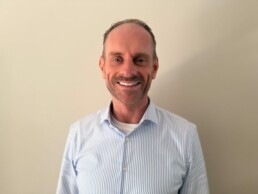
Christian’s career path is anything but conventional. From flight attendant to interpreter, and later a pivotal role at Netflix, he’s always found himself close to customers. His CX career formally began in 2017 at Netflix’s Amsterdam office, where he helped scale customer support. Now, at Deliverect, he leads a global team of around 50 people spanning from Australia and Dubai to Madrid, Mexico and Toronto.

Understanding the brand: Deliverect
Deliverect provides the invisible digital backbone of restaurant operations—integrating order platforms, streamlining kitchen workflows, and reducing operational chaos. The company operates worldwide and has scaled rapidly.
Christian says. “We work in the background, making digital order management and the digital evolution for the restaurant business easier.” With over 500 employees globally, Deliverect is rapidly growing—bringing both opportunity and complexity.
The challenge: from firefighting to future-building
When he joined, Christian’s role focused entirely on support. The business was scaling fast, and the priority was building a team that could keep up. But over time, it became clear that a broader, more strategic view of the customer journey was needed. That shift—from operational support to holistic experience—didn’t come without any hurdles.
One of the biggest challenges was prioritization. In a high-growth environment, teams were stretched thin, and while customer experience was valued in theory, gaining time and attention in practice was tough. “I struggle with getting commitment even from leaders in my organization—not because they were not passionate, but there are so many other fires that need your attention right now.”
On top of that, regional differences in expectations made it difficult to design and scale a consistent experience globally. “The cultural expectations and traditions in each region are very different—not only for how they would like to reach out to a support team, but what they expect from us as a company.”
The solution: building CX into the DNA
Christian gradually transformed the support-focused function into a more strategic one. At the start of this transformation was a newly developed CX strategy, focused on four emotional outcomes Deliverect wants customers to feel:
empowered, thriving, supported, and trusting.
These outcomes were validated through customer journey mapping, followed by in-depth interviews with customers from key segments. The team used this process to identify gaps between intention and perception—for example, discovering that customers felt less supported during post-sales moments.
Several initiatives helped embed CX more deeply into the company:
- A company-wide refresh of vision, mission, and values, including a clear customer-facing value.
- CX masterclasses to strengthen internal skills and understanding.
- A flexible governance model using topic-based subcommittees, giving stakeholders a focused way to collaborate on current challenges.
- A clear follow-up process for customer research, with action plans owned by senior leaders and tracked over 3–4 months.
Christian’s team also uses AI to tag support conversations and analyze sentiment—both rated and unrated—to surface product issues and inform priorities. “We get a good report on what types of our product create the most support tickets. Then it gets interesting to deep dive into that.”
To support product development, feedback loops have been established between CX, product managers, and engineering. “We have to balance what our customers really ask for with the vision of where we want to go as a company.”
Lessons learned & advice for CX professionals
One of Christian’s key lessons is the importance of visibility. Communicating CX goals once isn’t enough—you need to repeat them, reinforce them, and be present. “It takes constant communication,” he says. “But it pays off.”
He also emphasizes the value of treating CX as a discipline. Although metrics like NPS and CSAT are tracked, they aren’t goals in themselves—they’re conversation starters. “We don’t steer our company on NPS... but we measure it exactly the same way all the time. If our NPS changes, it must be for a reason.”
What helps? Closing the loop. “When we have a bad month on NPS, we look into the detractors. We analyze the communication, and our account managers reach out to the accounts they own to better understand what happened.”
Final thoughts
Christian is proud of how the team scaled support operations while laying a strategic foundation for CX. In the early days, complaints were high and expectations tough to manage. “The first two months that I joined this company, we received many complaints,” he recalls. “We are at a much better place now.”
The numbers reflect the shift:
“We had customer satisfaction trending at 78–79% and now we’re trending at almost 90. Our NPS was sometimes down to zero—now we’re at 30 to 35.”
Looking ahead, he sees great potential in AI—but only if applied responsibly. “AI is also less intelligent when it comes to sharing sensitive data. So a lot of guardrails—human guardrails—need to be in place in this evolution.”
His advice for others?
“Dare to take some calculated risks. Use technology in your customer-facing experience… combined with a human touch, it’s just amazing what you can do.”

From scratch to strategy: Sirikit Huibers’ CX transformation at Greenchoice
From scratch to strategy: Sirikit Huibers’ CX transformation at Greenchoice
For the past three and a half years, Sirikit Huibers has led a quiet CX revolution at Greenchoice. As Customer Experience Lead, she built the foundation for a company-wide transformation—aligning customer understanding, unifying feedback measurement, and embedding a culture of continuous improvement. Her story is one of strategic patience, grassroots energy, and a deep belief in the power of collaboration.
Who is Sirikit Huibers?
Sirikit’s customer mindset was shaped early. Spending summers working at her parents’ bungalow park at Ko Samui in Thailand, she learned first-hand how to serve with empathy and authenticity. “That’s where I learned how to offer excellent service by staying close to yourself,” she explains. Her career later spanned housing and pensions, with CX roles at Stadgenoot and APG. “That’s when the flame really lit for me,” she says, recalling the first time she co-created a service blueprint for both customer and employee journeys.
At Greenchoice, she stepped into a role that didn’t yet fully exist—tasked with shaping a CX approach from the ground up.


Understanding the brand: Greenchoice
Greenchoice is one of the Netherlands' top five energy providers, serving over 650,000 customers with a strong focus on sustainable energy. A former scale-up turned grown-up, Greenchoice still has a strong sense of ownership across the company—and a culture of autonomy that doesn’t naturally lend itself to top-down change. That made Sirikit’s work both exciting and complex.
The challenge: shaping a CX foundation in a decentralized culture
When Sirikit joined, CX was fragmented. “There were different customer profiles, different KPIs, and people were calling process maps ‘customer journeys,’” she recalls. Multiple teams were doing good work—but without shared direction.
Adding to the challenge was the company’s culture. With roots in start-up energy, everyone felt ownership. That meant imposing a strategy from above wasn’t an option. “We realized a bottom-up strategy would fit best,” Sirikit says. Her first step wasn’t to announce a grand vision, but to create practical tools that empowered colleagues to get started on their own.
The solution: bringing structure, step by step
Sirikit’s transformation approach rested on aligning the basics—shared customer profiles, a central feedback measurement framework, CX principles, and a strong internal network to keep things moving.
- One shared customer view
One of the early breakthroughs was aligning on a single set of customer profiles. “I found it incredible that people on the website team said they had a totally different customer than the service team,” Sirikit says. With the help of a research agency and colleagues from across departments, they mapped out overlapping insights in structured workshops. The result was a clear, shared framework based on the Mentality profiles, with simple names like the world-improver or the convenience-seeker.
“We introduced them in a big virtual session during the tail end of COVID—then played a round of petje op petje af to test the knowledge on the customer profiles and to make it stick.”
- Fixing fragmented feedback
Greenchoice had customer feedback pouring in—just not in a way that made sense. Sirikit brought all measurements into a single dashboard. That dashboard made it painfully clear: different scales, metrics, and formats meant results weren’t comparable. “That’s when I brought it to the leadership team. I said: we have a beautiful dashboard, but we can’t compare anything,” she explains.
With support from the C-level, she implemented a consistent KPI framework and transitioned from siloed reporting to one shared “meethuis.” The long-term ambition? “To report company-wide on NPS by 2026. Because with NPS, you can build real programs for improvement.”
- Defining and activating CX principles
Next came a set of four CX principles—simple, strategic guidelines designed to make it easier for teams to deliver great customer experiences. But rather than just share a slide deck, Sirikit turned the rollout into a game. “Think Pictionary, but with CX principles. It’s one big game board with questions designed to get teams thinking: what am I already doing? What could I do more of? What would I love to do in an ideal world?” - Building a CX team
What began as a solo role quickly grew. As demand for CX support rose, Sirikit built a central team of specialists across loyalty, insights, automation, and employee experience. “There were so many good ingredients already—CX just needed a stronger central structure to support it.” - Growing a network of ambassadors
Beyond the formal team, Sirikit nurtured a grassroots movement. “I collected CX ambassadors across the organization—people who were already naturally involved with the customer.” This was done through many network coffees, in company CX Masterclasses as well as a dedicated EX member in her team focused on improving the customer centric culture. These ambassadors became local champions for using the measurement framework and CX thinking. “That worked really well. In an autonomous culture, it helps to have someone in your own team who takes ownership.”
Lessons learned & advice for CX professionals
CX frameworks may look great on paper—but they don’t always fit reality. “I’ve learned that the theory behind CX is solid, but the reality is more stubborn,” Sirikit says. “You have to align with the organization’s culture, its timing, and its priorities.”
Her advice to fellow CX professionals?
“Stay close to yourself. Don’t give up. Trust your gut, trust your knowledge—and keep moving toward the places where energy flows.”
Final thoughts
Sirikit leaves behind more than a strategy—she leaves behind a movement. A shared customer language, a common measurement framework, a growing ambassador network, and a CX game that will keep the conversation going.
Her proudest achievement? “That there’s a real CX department now. We started with nothing. And now it’s something that will last.
In May 2025 Sirikit started as Manager Customer Experience at UWV (the Dutch Employee Insurance Agency), ready to take on a new challenge.