

From Fragmented Efforts to Unified Experience: How Katja Veen-Buchholz Elevated CX at HTM
From fragmented efforts to
Every day, more than 300,000 people travel through the Hague region using HTM’s trams and buses. Public transport may appear predictable from the outside, yet the experience of travelling is shaped by hundreds of small interactions: announcements, clarity, cleanliness, helpfulness and coordination.
HTM already scored highly in traveller satisfaction and was repeatedly named the best city transport operator in the Netherlands. The next question became: how do you shift from “good” service, to an organisation where every department feels responsible for the traveller experience?
For Manager Customer Experience Katja Veen-Buchholz, the mission was clear. She set out to build a shared sense of customer ownership in a complex operational environment.
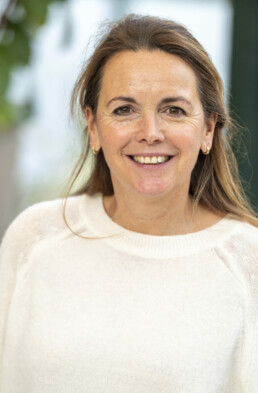
Who is Katja Veen-Buchholz?
Katja joined HTM after building experience at KPN (telecom), Eneco (energy) and Nationale-Nederlanden (insurance and pensions). These roles shaped her strong foundation in communication, customer focus and organisational change. She brought this experience into HTM, where the CX function still needed to be built almost from scratch. Her approach is pragmatic and people-centred, with a natural ability to unite disciplines and turn ideas into movement.
The challenge: embedding customer focus in a complex organisation
HTM already offered reliable service, yet customer centricity was not woven into everyday behaviour. Improvements happened in pockets, departments worked largely in silos and there was no shared structure or ownership for CX.
Katja’s challenge was to turn customer focus from a good intention into a daily reality, supported from the executive team through to the operational level.
The approach: ownership, rhythm and collaborative improvement
Van Lanschot Kempen began its CX journey in 2015, but early efforts were fragmented, focusing mostly on product and process improvements. According to Mustafa, this wasn’t enough: “With picking up a customer journey, you don’t necessarily change the DNA of an organization. That goes with baby steps.” By 2019, the bank launched a formal CX program, structured around three components: strategy, measurement & improvement, and people & culture.
The solution: A two-fold transformation
Understanding the organisation from the inside out
Katja began by organising duo-interviews across levels and disciplines. Colleagues from different disciplines such as HR, Operations and Legal were brought together to reflect on customer experience strengths, blind spots and opportunities. These insights formed the basis for six CX pillars and a simple maturity baseline.
Giving every pillar clear ownership
Each CX pillar was assigned to a duo consisting of one tactical manager and one operational manager. Together, they were responsible for defining priorities and delivering concrete results. Regular cross-pillar sessions aligned decisions and strengthened collaboration.
Creating rhythm and speed
Katja introduced an agile light rhythm with stand-ups, short cycles and demos. This made progress visible, created learning moments and helped maintain momentum.
Activating the TOV team for quick wins
To show impact quickly, Katja activated the multidisciplinary TOV team. TOV began as “Terug naar het OV” (Return to Public Transport), a post-pandemic initiative, and later evolved into “Top in het OV” (Excellence in Public Transport). The team focuses on small, high-impact improvements in short cycles. One example is refining information at tram and bus stops to make routes and disruptions easier to understand. These practical adjustments helped colleagues see how small changes can immediately improve the traveller experience.
Growing customer focus within her own team
Her team, originally focused on marketing, communication and content, gradually developed a stronger customer mindset. They went into the field, spoke with travellers and brought real customer insights into meetings and decisions. One of the projects they delivered was mapping the journey of travellers who received a fine for not purchasing a ticket. This revealed unclear communication, gaps in guidance and a payment process that was difficult to navigate. The improvements that followed made the experience less stressful for customers and increased payment completion rates, which directly generated additional revenue for HTM.
Building a culture where everyone contributes
What makes Katja most proud is seeing colleagues from across HTM initiate improvement ideas themselves. People discovered that their input matters and that small adjustments create real value for travellers. This culture shift contributed to higher customer satisfaction, cost improvements and HTM being recognised as the best city transport operator for the fifth consecutive year.
Lessons learned & advice for CX professionals
Engage your executive team early and keep them close.
Leaders need a clear storyline and visible progress to stay committed and help drive the movement.
Choose the right name and identity for your programme.
Katja learned that naming matters. The first name she picked did not resonate widely. A strong, clear identity creates shared language and helps colleagues feel part of the initiative.
Work multidisciplinary and build shared ownership.
Combining perspectives leads to better solutions. Predictable working rhythms help colleagues contribute ideas and anchor CX in everyday work.
Share the results you deliver.
Show both the customer and business impact. Improved satisfaction, fewer avoidable contacts, clearer payment journeys that increase completion, and the value created by new propositions all help colleagues see why CX matters and why their contribution makes a difference.
Final thoughts
HTM is an operationally complex organisation where thousands of small actions shape each day’s service. Katja’s work shows that transforming customer experience is not about grand gestures. It is about building ownership, creating rhythm and helping teams take small steps that lead to meaningful improvements for travellers.
When colleagues across the organisation realise they can make a difference, customer experience becomes not just a function but a shared way of working.

From student vibes to scalable service: Suzanne Mittendorff’s CX journey at Swapfiets
From student vibes to scalable service: Suzanne Mittendorff’s CX journey at Swapfiets
In the world of bike subscriptions, customer experience is not just about having a bike – it’s about freedom, convenience, and the confidence that problems will be solved quickly. That promise has been at the heart of Swapfiets from day one. But as the company expanded into eight countries and dozens of stores, the question became: how do you deliver a consistent, professional experience everywhere?
For Suzanne Mittendorff, Head of Customer Experience, that became her mission: building scalable standardization without losing the energy and friendliness of the brand.
Who is Suzanne Mittendorff?
Suzanne is 37 years old, studied economics, and started her career in banking. At De Bijenkorf she first experienced CX in a retail environment. Four years ago, she joined Swapfiets, where she became responsible for both store experience and the complete customer service operation across eight countries.
“Swapfiets is, at its core, a service company. We don’t sell bikes – we promise an always-working bike, without hassle.”
She leads the Swapdesk (customer service) and drives central initiatives to improve store experience. Purchases happen online, service via app, phone or WhatsApp – so CX is integrated into every process.

Understanding the brand: Swapfiets
Swapfiets was founded ten years ago by three students in Delft who wondered why owning a bike involved so much hassle. Their idea was simple:
✔ a fixed monthly price
✔ an always working bike
✔ Swap handles the repairs
They started with 100 second-hand bikes – which were rented out instantly. Today, Swapfiets has 280,000 customers across eight countries and 45 cities, including the Netherlands, Belgium, Denmark, Germany, Austria, France and the UK.
The target group expanded from students to young professionals and e-bike users. Employers now also offer Swapfiets as a mobility benefit.
The challenge: rapid growth without consistency
In the early years, priority was expansion: more cities, more bikes, more stores. But that created a risk:
- each store did things differently
- customer experience depending on who worked that day
- messy counters, dead plants, duct-taped posters
- screens installed but turned off
- conflicting experiences between store and customer service
“Everyone delivered awesome service, but without global standards. That stops working when you grow and offer e-bikes for your professionals.”
The solution: SwapCares principles and self-service that works
Suzanne and her team created service standards and the SwapCares principles to guide employee behavior: Connect, Aware, Respect, Extra Mile and Smile
To make this real, she launched service masterclasses, mystery visits, Store of the Year Awards, service ambassadors and scorecards.
“You can’t explain it once. You need repetition. People need to see it, practice it, and celebrate it.”
By analyzing data, Suzanne discovered that many customer questions were preventable. Swapfiets built solutions such as a scheduling tool to plan appointments, clear invoice explanations, and product videos.
The result: 30% fewer customer contacts – without reducing human service.
Lessons learned & advice for CX professionals
- Start with consistency:
Set the foundation before scaling. Clear service standards and behaviour guidelines ensure customers receive the same experience no matter where or when they engage with you. Structure protects your brand from growing “messy.” - Involve frontline teams early:
Your teams know which processes confuse customers and where friction actually happens. When they help shape the solution, adoption is faster and the fixes are more realistic. - Follow-up matters more than launch:
A CX change doesn’t succeed in a workshop — it succeeds on the floor. Continuous coaching, visual examples, and celebrating small wins keep momentum alive long after the kick-off. - Self-service + human service must coexist:
Customers want convenience and autonomy, but they also want reassurance that a person is there when needed. Offering both reduces contact volume and increases trust.
Final thoughts
Swapfiets began as a student project with 100 bikes. Today it is an international service organization where CX is the core of the customer promise. “The best moment is seeing a blue bike wheel in the city and thinking: this works. That’s what we do it for.”